Same Sentence, Different Stress, Different Meaning: English Stress and Intonation
Plenty of learners pronounce individual words accurately, yet the moment they speak, the whole sentence sounds like they're reading from a textbook: every word the same weight, the same length.
English relies on stress and intonation to carry meaning. Same words, different stress, and the meaning can change completely.
One Sentence, Seven Meanings
Take this classic example: I didn't say she took the money.
- I didn't say...: Someone else said it, not me.
- I didn't say...: I never said that at all.
- I didn't say...: I didn't say it out loud, but I may have hinted.
- I didn't say she...: I didn't say it was her; it was someone else.
- I didn't say she took...: I didn't say she took it; maybe she borrowed it.
- I didn't say she took the money...: Not all of it, just some.
- I didn't say she took the money...: It wasn't the money she took.
Not a single word changed. Move the stress, and the meaning moves with it.
Intonation: Rising or Falling
- You're coming? (rising): a question, with a hint of surprise
- You're coming. (falling): a statement; I know you'll be there
- Really? Rising sounds curious; drawn out and falling can sound doubtful
Another pattern: in everyday speech, content words (nouns, verbs, adjectives) are usually stressed, while function words like a, the, to, and of are often reduced. That's what gives English its rhythm.
Shadow, Record, and Compare to Hear Your Own Gaps
You can't learn stress and intonation just by reading about them. You have to listen, imitate, and compare.
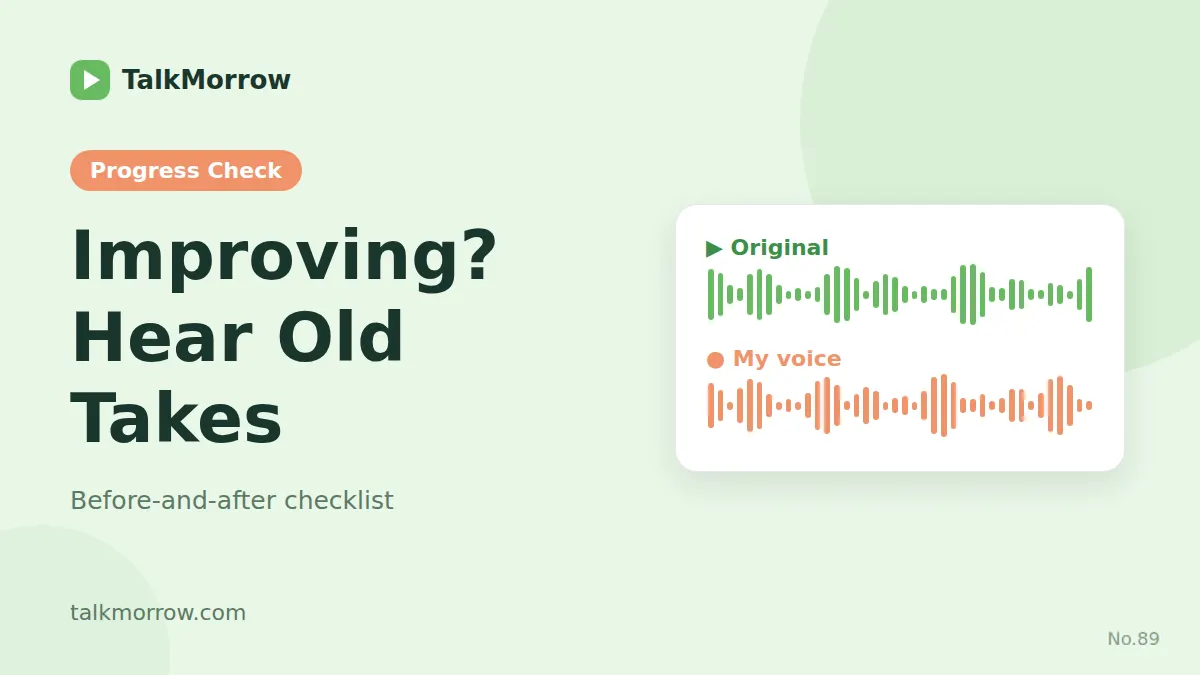
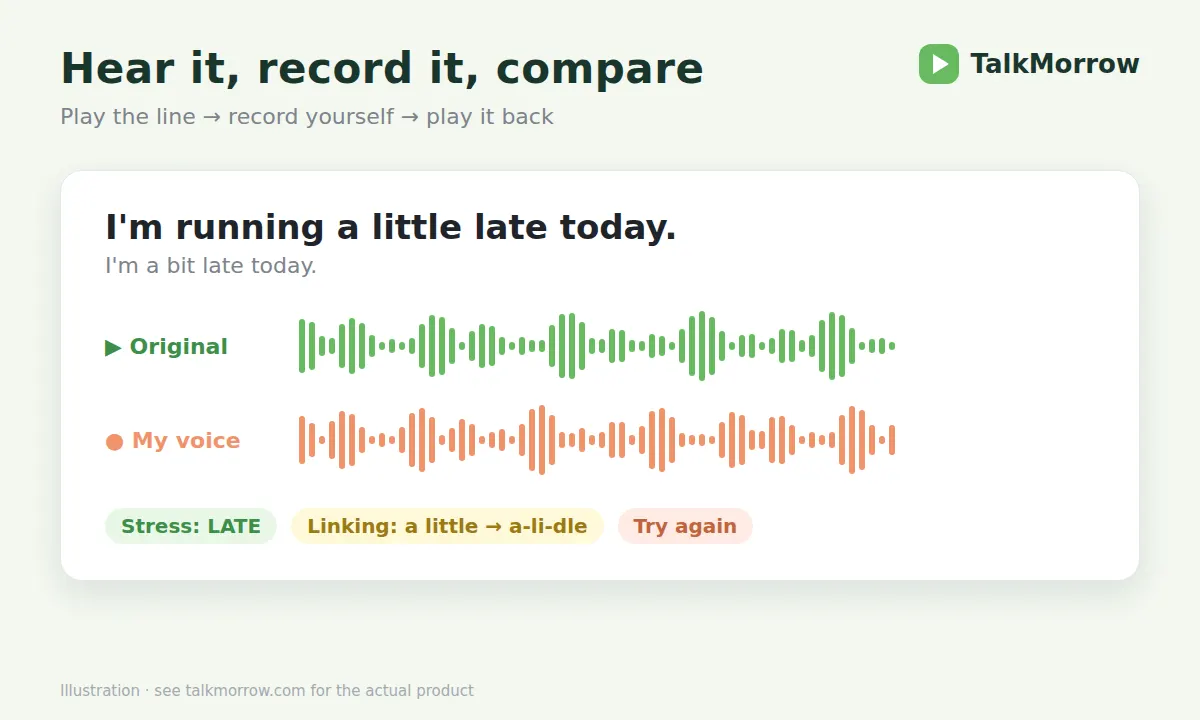
On TalkMorrow, pick a vlog sentence you like. First play the original and notice which word the creator stresses most, where they pause, and whether the end rises or falls. Then record yourself shadowing it, play your recording back against the original, find the differences, and try again. Once signed in, you can save your recordings and listen back later, and the progress becomes obvious.
Turning on sentence loop and a slower playback speed makes it easier to hear where the stress lands. The shadowing method in the Learning Guide on the website is great for practicing intonation too.
Exercise
Take the example sentence above and say it once for each stressed word. Record yourself, then ask a friend to guess which meaning you intended.
👉 Imitate real speech at talkmorrow.com, and make your English carry meaning, not just words.