You Know Every Word, So Why Can't You Catch the Sentence? A Guide to Connected Speech
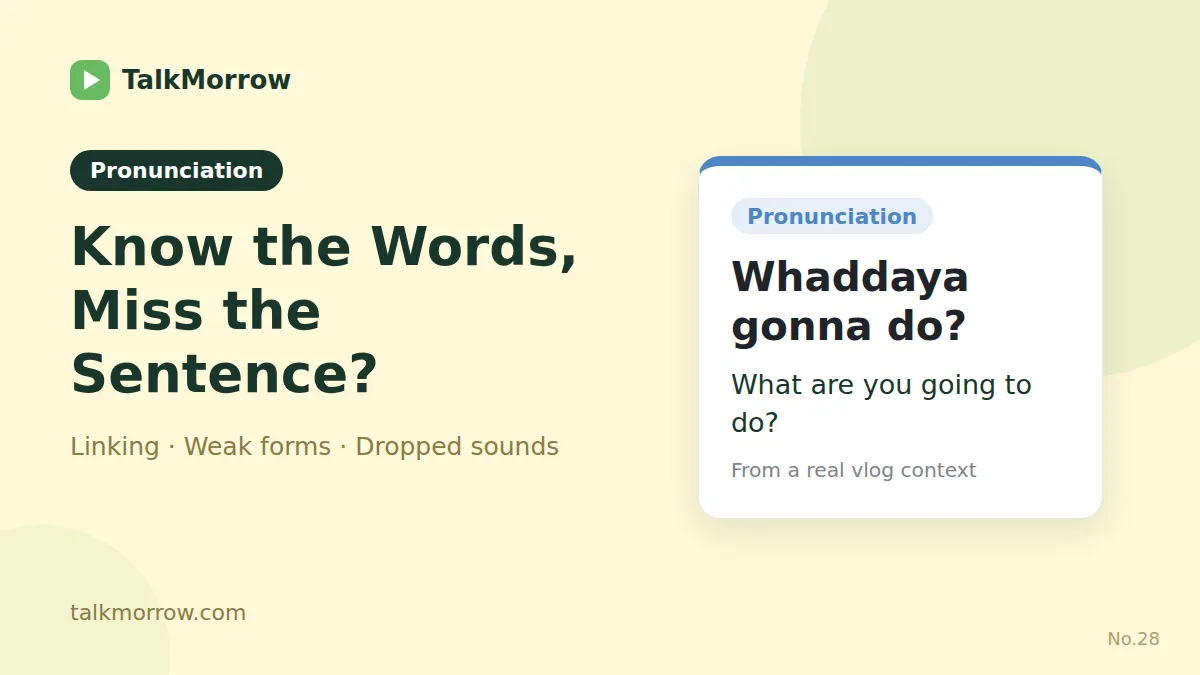
"What are you going to do?" You know every single word.
But when a native speaker says it, it comes out as "Whaddaya gonna do?" and you completely miss it.
Your listening isn't bad. You just haven't gotten used to the most common sound changes in spoken English.
Three Common Changes in Spoken English
Linking. The end of one word runs into the start of the next.
For example, pick it up sounds like "pi-ki-tup."
Weak forms. Small, less important words get said quickly and lightly.
To often becomes /tə/, and and may shrink to just /n/.
Dropped sounds. Some sounds almost disappear in fast speech.
In next day, you often can't hear the t at all.
Textbook audio is usually recorded slowly and clearly. Real conversations are full of these changes, which is why listening practice needs real speech.
Tackle It With Real Vlogs
TalkMorrow uses real, unscripted speech from creators around the world, so linking and weak forms show up naturally everywhere. With the player, you can practice like this:
- Find the sentences you miss. Listen with subtitles off and note where you lost track.
- Slow down and loop. Lower the speed, loop the sentence, and check the subtitles to find the sounds that "vanish" or "stick together."
- Shadow it. Copy the linking slowly first, then try it at full speed.
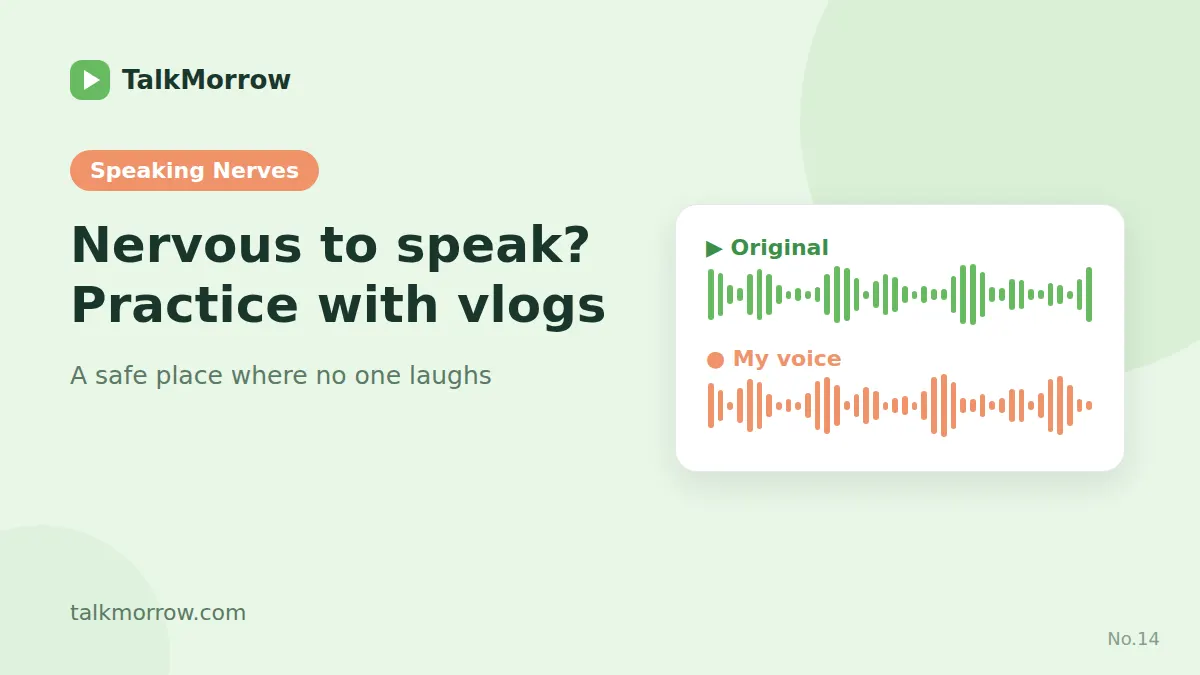
- Record and compare. Are you still saying it one word at a time?
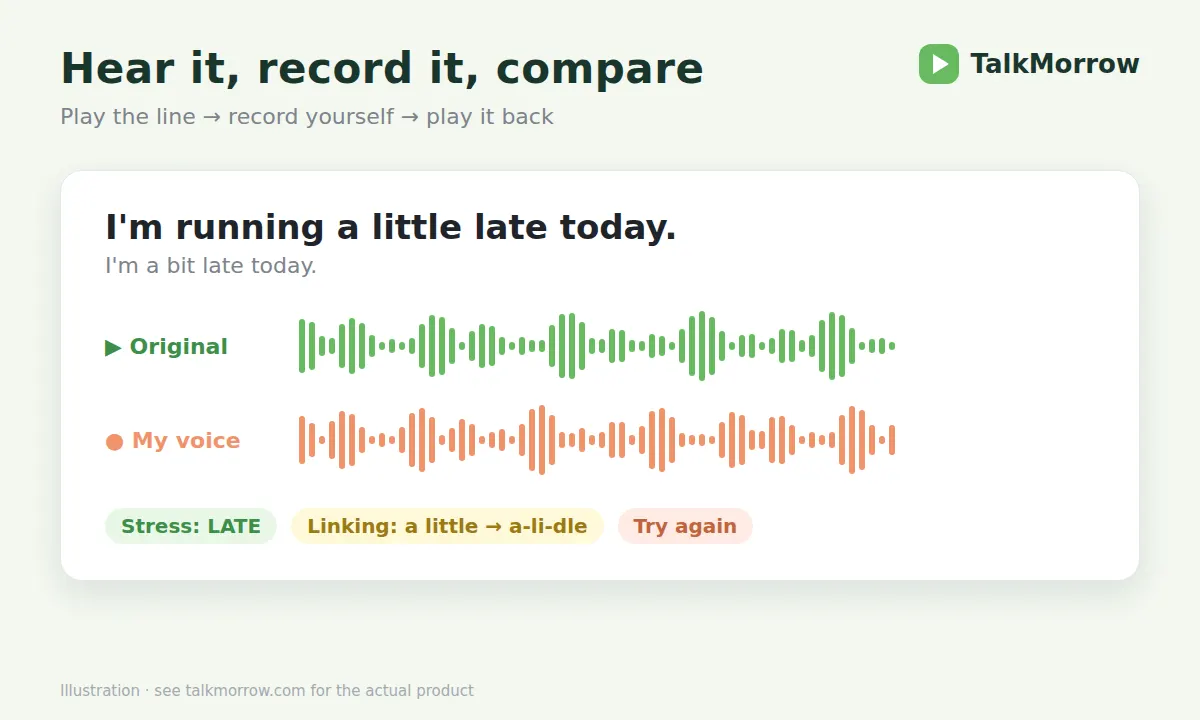
Say It, and You'll Hear It
Once you can say going to as "gonna" yourself, you won't get stuck when you hear someone else say it. Pronunciation and listening are two sides of the same coin.
👉 Go to talkmorrow.com, open a free video, and practice the hardest sentence you can find.